Grocery Store Anxiety: Why Shopping Is So Stressful for Caregivers
Family caregivers do a lot: medication schedules, doctor calls, meals. All while somehow still getting groceries into the house. Add a crowded parking lot. Add a parent who wanders toward the bakery, or a restless kid tugging at your sleeve. It’s easy to see why grocery store anxiety creeps into so many caregiving weeks.
I lived this for years. I’d drive my father, who had dementia, and my young nephew to the store together, always hoping we’d leave with everything on the list and nobody lost in the cereal aisle. Grocery shopping doesn’t have to feel like a gauntlet. A simple five-step system: plan, list, shop, store and simplify, can turn one of the hardest parts of caregiving into one of the easiest.
Why Grocery Store Anxiety Hits Caregivers So Hard

Caregiving already asks a lot of you. An estimated 63 million Americans provided unpaid care for an adult or a child with a complex medical condition or disability in the previous year.
For many caregivers, grocery shopping competes with a long list of daily responsibilities. AARP research found that 37% of caregivers say caregiving makes shopping more difficult. It gets even harder when you’re also managing a loved one’s needs in a busy retail environment.
It’s not just about hauling bags up the stairs. Store trips come with real safety worries too. AARP’s research flagged caregiver concerns including exposure to illness, inadequate parking, narrow aisles and limited seating. Add a care recipient who resists a list or a budget, and a simple errand can turn into a disagreement on Aisle 9.
That was my reality through much of the early 2000s. I regularly took my 82-year-old father, who had dementia, and my seven-year-old nephew grocery shopping at the same time. My dad tended to wander. He’d strike up conversations with strangers, which worried me every time we walked through the doors. My nephew had his own agenda, usually the toy aisle. I found myself tracking two people, comparing prices and trying to dodge impulse buys every time the three of us set foot inside our local Walmart.
Watching over a loved one. Guarding a budget. Moving through a crowded store. That mix explains why grocery shopping is so stressful for so many caregivers. You have to be three people at once, in a space nobody designed with any of that in mind.
See how asking for help can make caregiver duties like shopping easier.
Plan First: Build a routine you don’t have to reinvent every week.
A routine can reduce the number of decisions you need to make each week. Pick one or two days a week for shopping and stick with them. That way, the errand becomes a fixed part of your schedule instead of one more thing competing for your attention.
Consider rotating a small set of familiar meals that fit the care recipient’s preferences and dietary needs. Once you’ve settled on the meals, the shopping list writes itself. A little structure now can help save you a lot of stress later.
Read how the batch cooking method can reduce decisions too.
Stop starting your grocery list from scratch.

One of the biggest causes of grocery store anxiety is having to rebuild the same grocery list from memory every single week.
As a starting point, build a master list of the items you buy most often. For many households, that may be around 30 to 50 items. Group them by the section of the store where you’ll find them. Keep the list on your phone, or print a stack of paper copies. Then simply check off what’s running low before each trip. Update the list any time something runs out for good, so it keeps working for you. You’ll spend less time thinking and more time doing.
A starter list might include:
- Produce: bananas, spinach, apples
- Proteins: chicken thighs, eggs, canned tuna
- Pantry staples: rice, olive oil, canned beans
- Household basics: paper towels, dish soap
- Personal care items: toothpaste, body wash
Learn how nutrition education can help you build your list.
The Benefits of Online Grocery Shopping (and When In-Store Still Wins)

Online grocery shopping isn’t a fad anymore. In a 2022 study, USDA researchers found that 19.3% of people who usually participate in household grocery shopping bought groceries online at least once in the prior 30 days. Of those online grocery shoppers, 44.7% placed three or more orders.
In a 2019 survey, nearly eight in 10 caregivers who shop said they prefer shopping in a physical store, often because they can inspect products directly. AARP found that 83% of caregivers shop online at least occasionally, including 58% who do so often or sometimes.
Research suggests that online grocery shopping may support healthier purchasing patterns for some households. Penn State researchers report that online shoppers often spend more on foods such as fruits, vegetables and whole grains and make fewer impulse purchases, although results can vary with local food access and the choices available online. A separate 2021 study found lower spending on candy and desserts during online grocery purchases than during in-store purchases.
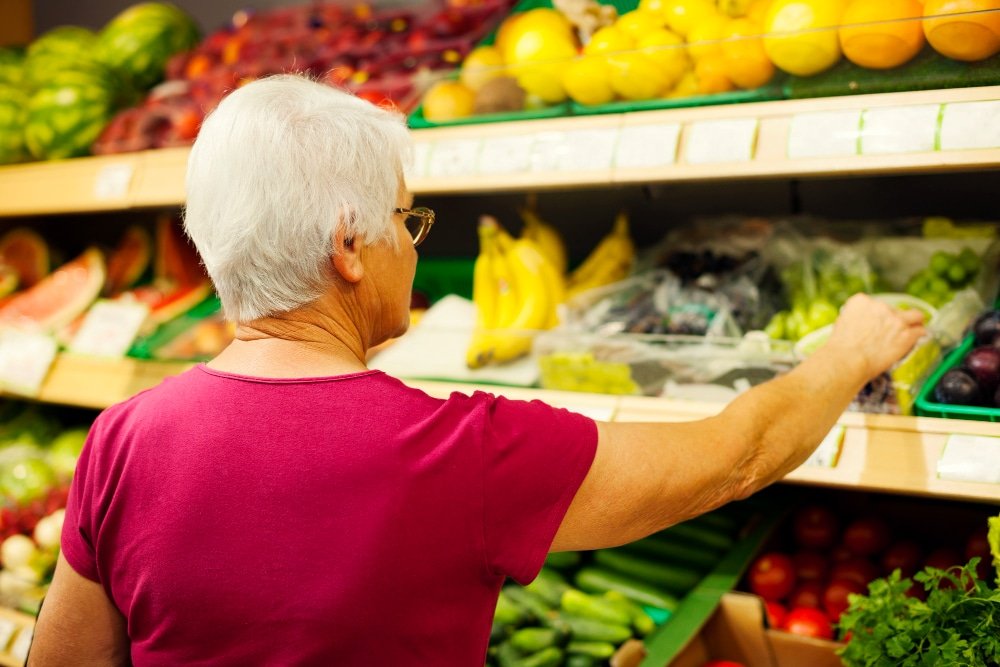
In-store shopping still has its place though. One of my favorite times to shop was early on a weekday morning, around 7 a.m., before the lot filled up and the aisles got crowded. Shopping alone in a quiet store gave me a few minutes to think, and it turned an errand into something closer to a small break. If mornings like that aren’t available to you most weeks, online ordering can offer a similar kind of calm without the early alarm.
Grocery Shopping for Two Households Without Doubling the Work
You may be shopping for your own home and a parent’s or another loved one’s home in the same week, sometimes on the same trip. Keep the two lists visually separate. Use a different note, app or color for each one, so you don’t mix up items at checkout. If it helps, consider shopping for your care recipient’s needs first, when you are most focused.
Store the basics: Keep your most-used items on hand.
Keeping frequently used staples on hand can reduce last-minute store trips. For shelf-stable or frequently used items, consider keeping a backup when storage space, budget, expiration dates and dietary needs allow. That includes things like a backup carton of eggs or an extra jar of a favorite sauce. That small habit keeps a busy week from turning into a last-minute scramble.
Simplify with tools built for grocery shopping.

You don’t have to build every system from scratch. A few tools worth trying:
- List apps that sync between your phone and a family member’s
- Store apps that show weekly deals and where you can find certain products on the shelves
- AI meal planners that can build a week of dinners from a photo of what’s already in your fridge
- Price comparison apps that help stretch a fixed budget even further
These tools won’t do the caregiving for you, but they can take a few decisions off your plate each week.
15 Grocery Shopping Solutions for Caregivers rounds up specific products worth adding to your cart.
Grocery shopping is a small part of a much bigger job. And it comes with certain anxieties. But with the right planning, you can limit grocery store anxiety and the pain points that come with this important caregiving task.
Caregiver Grocery Shopping FAQ
Why does grocery shopping feel so stressful for family caregivers?
For some family caregivers, shopping means balancing a care recipient’s needs, a budget, time constraints and accessibility challenges in a busy store. In an AARP survey, 37% of caregivers said caregiving made shopping more difficult.
What are the benefits of online grocery shopping for caregivers?
Online shopping may help some caregivers avoid crowds, parking challenges, waiting in line and the need to bring a care recipient into the store. Research also links online ordering to fewer impulse purchases, though food choices and outcomes vary by household and local access.
How many items should a caregiver’s master grocery list include?
You can aim for 30 to 50 regularly purchased items, grouped by store section. That way, you check off what’s low instead of rebuilding a list from scratch each week.
How can caregivers grocery shop for two households at once?
Keep separate lists, by note, app or color, for each household. Shop for the care recipient’s needs first, and pay separately at checkout when possible to avoid mixing items or budgets.
What tools can make grocery shopping easier for caregivers?
You may reduce grocery store anxiety by using apps that sync shopping lists across family members, store apps for deals and aisle locations, AI meal planners and price comparison apps can all remove a few decisions from an already full week.
Disclaimer: This article is for information and education only. It is not a substitute for advice from a doctor, therapist, financial advisor, or lawyer. Every caregiving situation is different. Always talk to a qualified healthcare provider, mental health professional, financial advisor, or elder law attorney before making decisions about a loved one's care, health, or finances.
Read our full disclaimer for more information. If you or someone you are caring for is experiencing a medical or mental health emergency, contact 911 or your local emergency services. In the U.S., the 988 Suicide & Crisis Lifeline (call or text 988) is available 24/7.