How a Simple Emergency Plan for Aging Parents Reduces Caregiver Stress
In 2025, 63 million Americans took care of sick or elderly family members. That’s almost 50% more than in 2015. Two out of every three caregivers find it hard to balance their jobs with taking care of their loved ones. When a family emergency happens, things get even harder.

The best emergency plan is one you don’t have to search for.
Picture this: Your parent falls, and you’re frantically searching for their doctor’s phone number. You can’t remember which medications they’re allergic to. The paramedics are asking questions you should know but can’t answer.
This is the reality for most family caregivers. When emergencies happen, stress takes over and your brain stops working clearly.
In the early 2000s, my brother Bob and I became our father’s primary caregivers. During that time, he had several health emergencies. Twice before our father died in 2002, he was admitted to the hospital with little warning. Few situations throw you into chaos like an unexpected caregiving crisis.
Looking back, a simple one-page emergency plan would have saved us considerable stress.
Why a Plan Cuts Through Caregiver Stress

Studies have linked higher caregiver preparedness to reduced caregiver burden and to lower levels of anxiety and depression.
As a family caregiver, you’re likely already juggling a lot. Between doctor appointments, medication schedules and your own life, adding “one more thing” sounds exhausting. But this single document could save you hours of panic and confusion.
A one-page plan means you don’t have to remember everything. You don’t have to dig through files or guess what to do next. Everything you need is right there, ready to use.
And when family members know where to look, you’re not the only one who can handle an emergency. That alone can reduce your stress by a lot.
Learn how to talk about an emergency plan with aging loved ones.
What Should Go on Your One-Page Emergency Plan
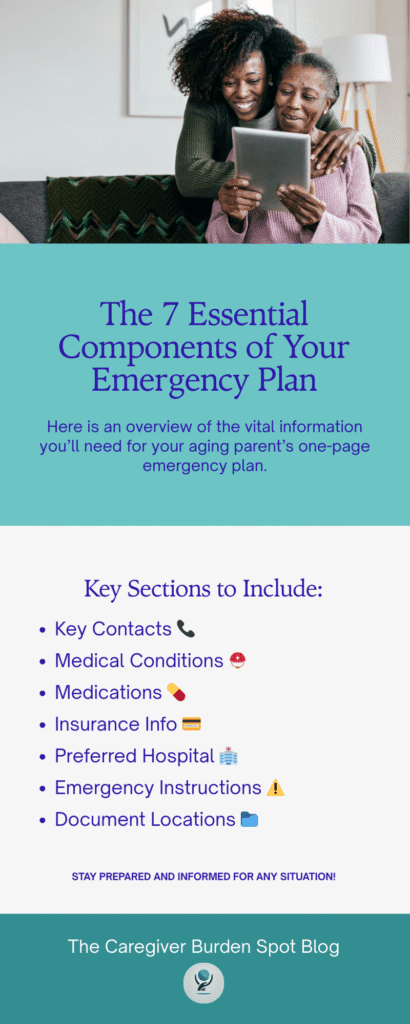
Keep it simple. You only need the information that matters most when seconds count. Some caregivers use Pinterest boards to discover emergency planning ideas.
Key Contact Information
- Name of primary caregiver (you)
- Name of backup caregiver
- Doctor’s office and after-hours number
- Closest hospital
- Pharmacy
- Trusted neighbor or friend nearby
Make sure this information is current. Outdated contacts won’t help anyone.
Medical Conditions and Allergies
- Major diagnoses only
- Conditions that affect daily care
- Serious medication or food allergies
Medical teams need this information to keep your parent safe. Don’t overwhelm them with minor details.
Current Medications
- Name of each medication
- Dose and frequency
- Why they’re taking it

Skip the refill dates and doctor notes. Just list what matters right now. If you’re unsure of the purpose of a certain medication, check the Medline Plus database of drugs, herbs and supplements.
Insurance and ID Information
- Insurance provider and policy number
- Prescription plan details
- Medicare or Medicaid information
Having this ready prevents frustrating delays at the hospital. Nobody wants to hunt for insurance cards during a crisis.
Preferred Hospital and Specialists
- Main hospital
- Primary care doctor
- Cardiologist, neurologist or other specialists
When your parent has existing relationships with doctors, make sure emergency responders know. This can prevent having to repeat medical history over and over.
Emergency Instructions
Write clear, specific directions that anyone can follow:
- “Call 911 if blood sugar drops below 70.”
- “Take to ER if breathing becomes rapid or labored.”
- “If Mom falls, call me before moving her.”
These instructions should match your parent’s actual health risks. Think about what emergencies are most likely to happen as well as what has happened in the past.
Location of Important Documents

Tell people exactly where to find:
- Advance directives and living will
- Power of attorney papers
- Backup medication list
- Legal documents
- Keys and wallet
Learn more about types of advance directives for health care.
When everyone knows where things are, you waste less time searching. This single section can save you twenty minutes of frantic hunting.
Where to Keep Your Emergency Plan
Your plan won’t help if nobody can find it. Pick spots that make sense for your family.
Good places to store copies:
- On the refrigerator door
- Taped inside a kitchen cabinet door
- In a labeled folder by the front door
- Inside your parent’s “go bag”
- In your car’s glove compartment
- Given to your backup caregiver
Digital plan options to consider:
- Saved on your phone (take a clear photo)
- As a shareable note in a notetaking app
- A PDF on your phone or tablet
Consider giving a copy to a trusted neighbor too. If you’re not home when something happens, they can help emergency responders get the information they need.
Update your emergency plan or it won’t work.
An outdated plan creates more stress, not less. Set a phone reminder to review it every three months.
Update your plan whenever:
- Medications change (this is the most important one)
- Doctors or insurance change
- Your parent moves
- Phone numbers change
- New diagnoses or medical conditions occur
Most caregivers forget to update when medications or dosages change. Don’t make this mistake. It’s one of the biggest problems during actual emergencies.
Get your family to use the plan.
A plan sitting in a drawer doesn’t reduce anyone’s stress. You need buy-in from everyone involved. Don’t be afraid to ask for help.
Talk to your siblings, your parent, and anyone else who might respond in an emergency. Show them where the plan is kept. Make it clear that following the plan isn’t optional in an emergency.

If family members push back, explain how it protects your parent and prevents arguments during high-stress moments. Most people get on board once they understand the benefits.
A plan gives you control when everything feels chaotic.

You can’t prevent emergencies from happening. But you can control how prepared you are when they do.
Creating a plan takes about 20 to 30 minutes. That small investment of time pays off the first time you need it. You’ll feel calmer, you’ll make better decisions and your parent will get better care.
As a caregiver, you deserve tools that actually help. This is one of the simplest and most effective tools you’ll ever use.
Emergency Plan for Aging Parents FAQ
How long does it take to create an emergency plan?
Most caregivers finish in about 20 to 30 minutes. Gathering medication information takes the longest, but once you have that, everything else fills in quickly.
Should different family members have different versions of the plan?
No. Everyone should use the same version to prevent confusion and ensure consistent emergency response.
What if my siblings or other family members won’t help create the plan?
Focus on finishing it yourself. Even if they don’t help make it, they can still use it when needed. Show them the finished product and explain where it’s stored.
My parent refuses to talk about emergencies. What now?
Start small and frame it positively: “I want to be ready if you ever need help.” Most parents agree once they see this protects them rather than controls them.
Can I just keep this on my phone instead of printing it?
Keep both versions. Digital copies are convenient, but printed sheets can be faster and more reliable when you’re stressed and moving quickly.
Disclaimer: This article is for information and education only. It is not a substitute for advice from a doctor, therapist, financial advisor, or lawyer. Every caregiving situation is different. Always talk to a qualified healthcare provider, mental health professional, financial advisor, or elder law attorney before making decisions about a loved one's care, health, or finances.
Read our full disclaimer for more information. If you or someone you are caring for is experiencing a medical or mental health emergency, contact 911 or your local emergency services. In the U.S., the 988 Suicide & Crisis Lifeline (call or text 988) is available 24/7.