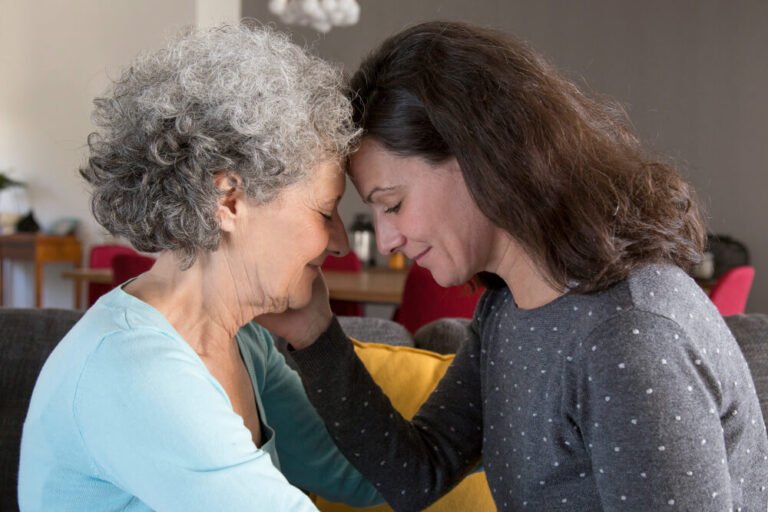
How to Give Healthy Hugs as a Family Caregiver
Editor’s Note: This post was heavily revised in August 2026 to include fresh perspectives and updated statistics. We regularly update this blog to ensure you have the most current resources.

Some hugs land just right. Others feel stiff, rushed or a little off. As a family caregiver, learning what separates the two is a practical skill. It’s a real tool for connection. Healthy hugs may help ease anxiety, slow the body’s stress response, and remind the person you’re caring for that they’re safe.
I didn’t always understand the difference. Decades of caregiving, first as a young nurse’s aide back in the 1980s and later as a full-time family caregiver, taught me to pay closer attention. Back then, I never hugged a patient unless they reached for me first.
That habit stuck.
These days I lean on firm hugs and thoughtful touch as one of my most reliable caregiving tools, but I still have to decide if I should ask before I reach.
We live in an odd moment in history for touch. Indeed, the side hug became common for a reason. We’re more aware than we used to be of how people experienced touch in the past, and that awareness is worth keeping. As a result, someone with a history of trauma may respond to a hug differently from you. That’s not a reason to stop hugging the people you love. It’s just a reason to talk about it first.
Check out my previous post on healing hugs.
Why Healthy Hugs Matter for Caregivers

Oxytocin and the Science of Bonding
Touch does something a to-do list never will. When you hug someone, research suggests the body may release oxytocin and other feel-good chemicals associated with bonding, calm, and care. Oxytocin is often called the “love hormone,” but research hosted by the NIH suggests its role is more complex. Rather than acting as a simple bonding switch, oxytocin supports physical intimacy and nurturing behavior.
The benefits stretch past the warm feeling. In a 2023 thesis, more daily hugs were associated with a smaller next-day cortisol awakening response. In simple terms, this response may suggest a calmer stress pattern as the day begins.
Stress Reduction and Heart Health
According to the Cleveland Clinic, research has linked affectionate touch and longer hugs with lower blood pressure and steadier heart rates in some settings. Some earlier studies also suggested that people who received more hugs were less likely to develop stress-related illness, though that finding is best treated as supportive rather than conclusive. If you already rely on healing hugs to lower stress, you’ve likely felt this for yourself.
For caregivers, the payoff goes both ways. A meaningful hug supports the person in your care, and it settles you too. That’s no small thing when you’re already juggling appointments, meals and worry.
This feels more natural and gives a feeling of balance and safety. If the person is shorter, taller, or has mobility issues, adjust to what works best for them.
Ask before you reach.
Consent isn’t a formality here. It’s the difference between a hug that helps and one that feels intrusive. That’s why it’s important to respect others’ personal boundaries.
Reading Non-Verbal Body Language

Watch the body language first. Open shoulders, steady eye contact, a step forward or arms stretching out often signal that a hug is okay. Folded arms, a turned shoulder, a downward gaze or a stiff posture often signal no. If someone starts to pull back mid-hug, it’s best to let go right away.
Navigating Personal History and Boundaries
When you’re not sure, just ask. A simple “Would a hug be okay right now?” removes the guesswork and shows respect. This matters even more with someone who carries a history of abuse or trauma. Hugs don’t have to be sexual to feel invasive if the timing or setting is wrong.
Frequency questions come up too. Some people expect a hug every time you see them. Others save hugs for after a long stretch apart. I’ve learned to watch the specific person in front of me rather than apply one rule to everyone. In my experience, some people who seemed closed off to hugs at first opened up over months of gentle, consistent care. Give that kind of trust room to grow.
Hug Techniques That Actually Work

Once someone says yes, small adjustments turn an average hug into one that actually lands. A few of these hug techniques are based more on practical observation than hard science.
- Use steady, even pressure instead of a stiff telephone-pole hug or a tent hug that keeps your hips pulled back.
- Try the diagonal hug: one arm over the shoulder and the other arm under the opposite arm, if it feels comfortable for both people.
- With family members, a smile and open arms go a long way. Gentle pressure is usually all that’s needed.
- Choose the arm position that feels natural and steady for both people.
None of this requires special skill. It just requires attention and a strong personal interest in the other person.
Timing Is Everything
How long should a caregiving hug last?
Probably longer than you think, but not by much.
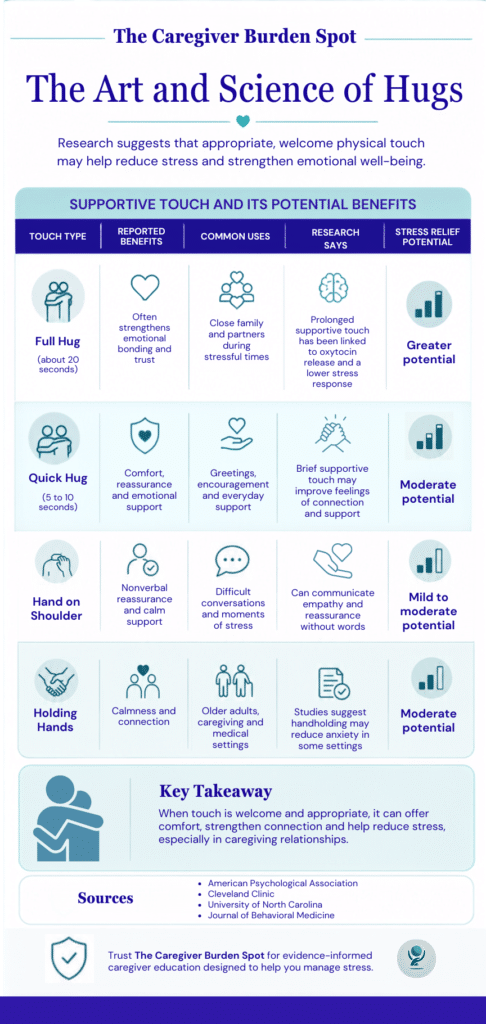
Some research suggests hugs lasting five to ten seconds feel more pleasurable than a quick one-second squeeze. In some observational research, platonic friends hugged for about three seconds on average, while romantic partners hugged longer. If you’re aiming for a more soothing, health-oriented hug, many people use a longer hold of around 20 seconds.
Adjusting Hug Duration Based on Intent

I learned this the hard way over the years. Hugs of greeting can be firm but brief. Hugs of comfort need more patience and softness. Holding on for too long can turn a comforting moment awkward fast, so watch for the other person easing back and follow their lead.
When a Hug Isn’t the Right Fit
Not every moment calls for a hug, and that’s fine.
Illness, the Workplace and Grief

Skip the hug if either of you is sick. You should probably skip it in most workplace settings too, where physical affection can create discomfort even with good intentions.
Grief calls for extra care. Asking “Would you rather have a hug or a hand squeeze?” hands control back to someone who may already feel like they have none. A handshake or a squeeze of the hand can mean just as much.

Recognizing Caregiver Burnout
If you’re stretched thin from constant giving, hugs can start to feel like one more task instead of a comfort. That’s usually a sign you’re overdue for a real self-care plan rather than one more thing to check off. Burnout has a way of flattening even the gestures that used to come naturally, which is exactly why taking a real break matters as much as any technique in this post.
“There is … a time to embrace, and a time to refrain from embracing.”
Ecclesiastes 3:5
Timing is as important as technique.
Ecclesiastes 3:5 says there is “a time to embrace, and a time to refrain from embracing.” That timeless truth has guided me for years. A hug offered at the wrong moment, no matter how well intended, can miss the mark entirely. A hug offered at the right one can carry someone through a hard day.
Caregiving already asks a lot of you. Between carrying the weight of caregiver duties and finding practical ways to manage the stress that comes with it, a hug might seem small.
It isn’t.
A good hug costs a few seconds and a little attention, and it can do more good than many items on your to-do list.
Pay attention to timing. Ask before you reach. Hold on just long enough, then let go with a smile or a kind word. Practicing healthy hugs won’t just help you avoid the hidden land mines of caregiver stress. It will make the people you love feel a little more held.
How to Give Healthy Hugs FAQ
How long should a caregiving hug last?
Aim for five to ten seconds if you want the hug to feel good in the moment. If you’re going for stress relief and heart-health benefits, a longer hug of around 20 seconds is a reasonable target. Let the other person’s comfort guide you either way.
What if the person I care for doesn’t like being touched?
Respect that fully. Ask before every hug, watch for signs they want space and offer alternatives like a hand squeeze or a few kind words instead. Comfort doesn’t require physical touch to count.
Is it okay to hug someone who’s grieving?
It can help, but ask first. Try something like “Would you rather have a hug or a hand squeeze?” so they stay in control of the moment.
How do I know if someone wants a hug?
Watch their body language. Open shoulders, steady eye contact and arms reaching toward you usually mean yes. Folded arms, a turned shoulder or a stiff posture usually mean no. When you’re not sure, just ask.
Can hugging really lower stress?
Yes. Hugging is associated with oxytocin and other calming responses, and research also links regular hugs or affectionate touch with lower blood pressure and better stress patterns in some settings.
Disclaimer: This article is for information and education only. It is not a substitute for advice from a doctor, therapist, financial advisor, or lawyer. Every caregiving situation is different. Always talk to a qualified healthcare provider, mental health professional, financial advisor, or elder law attorney before making decisions about a loved one's care, health, or finances.
Read our full disclaimer for more information. If you or someone you are caring for is experiencing a medical or mental health emergency, contact 911 or your local emergency services. In the U.S., the 988 Suicide & Crisis Lifeline (call or text 988) is available 24/7.