3 Caregiver Tasks to Delegate First When You Feel Overwhelmed

Caregiver tasks can pile up on you fast. The best ones to hand off first are meals and errands, rides to appointments and short companionship visits. These jobs repeat, they have a clear finish line and they are easy to explain. Sharing even one of them can free up hours in your week without putting your loved one at risk.
When my dad was in the hard later stages of dementia, my brother and I cared for him together. We had a strong circle of friends and family behind us. Most of the time, we didn’t even have to ask for help. People stepped up on their own.
I know not everyone has that kind of blessing. About 63 million Americans provided ongoing care for an adult or child with a complex medical condition or disability in the past year. In a 2025 national survey, just over half of family caregivers (53%) said they included unpaid helpers in their support network. Even when help is available, one person may still carry most of the day-to-day responsibility.
Delegating means you are building a care team that can last. It works best while you still have the energy to explain what you need. If guilt holds you back, learn how to ask for help without the guilt. You aren’t trying to escape your role. You are trying to stop being the whole system.
Why These Caregiver Tasks Should Come First
Some duties are easier and safer to share than others. Start with work that passes three tests:
- It happens on a regular schedule.
- A trusted person can do it with simple instructions.
- A mistake would be a hassle, not a danger to health or money.
That’s why a grocery run makes a better first handoff than medicine. If a helper grabs the wrong cereal, you can fix it. A missed dose can cause real harm. Start with low-risk work to ease the weight of caregiver duties. Then let the helper’s role grow as trust builds.
1. Delegate meals, groceries and household errands.

Food and errands eat up more time than you think. You plan meals, check supplies, write a list, shop, unload bags, cook and clean up. That’s a chain of chores, and it repeats every week.
This is often the easiest place for family, friends, neighbors or your church to step in. Someone can pick up groceries, grab a prescription, cook a freezer meal, mow the lawn or wash a load of laundry.
How to make the request
Skip the line, “Let me know if you can help.” It hands the work of spotting a need right back to you. Instead, give one task, one deadline and any key details.

Try this: “Could you pick up our grocery order every Thursday at 5:30 and leave it in the kitchen? I’ll place and pay for the order. It would save me about an hour each week.”
If the person can’t help every week, ask for a one-time job. A single meal or one pharmacy trip still takes something off your list.
Quick recap: Meals and errands are easy to see, easy to teach and easy to split up. One weekly handoff can clear several small decisions from your week.
2. Delegate transportation and appointment logistics.
A doctor visit takes more than the time in the exam room. You drive, park, fill out forms, stop at the pharmacy and make follow-up calls. Appointments can swallow whole days.
A trusted helper may be able to pick up a prescription or handle other routine errands, but confirm pharmacy rules and keep medication decisions, dose changes, setup and administration within a safe, clearly supervised plan. You still make the medical decisions. Someone else just handles the travel.
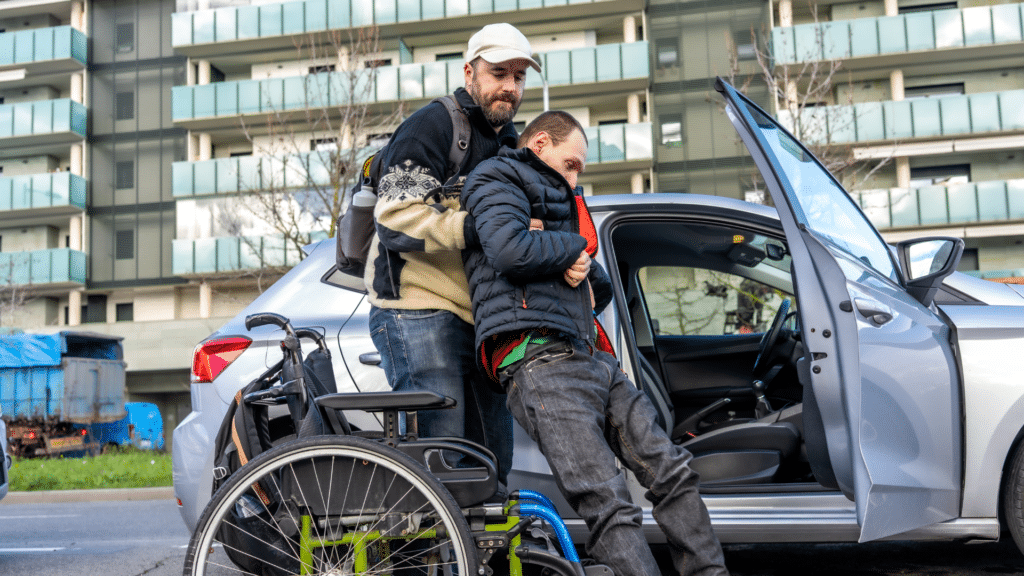
Before arranging a ride, make sure the helper can safely manage your loved one’s mobility and any equipment. After a procedure involving sedation, follow the clinic’s discharge and transportation rules rather than assuming any friend or family member can drive them.
Help with transportation doesn’t always mean a driver, either. Once, my brother’s car went into the shop, and we had no way to get around for three or four days. We didn’t ask a friend to do our shopping. Instead, we asked to borrow her car for a couple of hours. She gladly said yes. She had some physical limits, so lending us her car was easier for her than running errands herself.
The best request fits what the other person can actually give.
How to make the request
Try this: “Dad has a physical therapy appointment next Tuesday morning at 10 o’clock. Could you drive him, wait during the visit and bring him home? I’ll send the address, a contact number and a short note for the therapist.”
Get your loved one’s permission before sharing health information. If a helper needs to receive information from a health care office or speak on the patient’s behalf, ask the office what consent form or written authorization it requires.
Quick recap: Hand off the trip and the routine planning. Keep medical choices with the right person. Clear limits let a helper step in without any confusion about who is in charge.
3. Delegate companionship and short respite visits.

Maybe no single duty is crushing you. What wears you down is never being off duty. A regular visit from someone else gives you protected time to sleep, exercise, see your own doctor, attend religious services or just sit quietly.
My brother and I both worked part-time, and Dad needed company and something to do during the day. Our good friend Doris, a retired schoolteacher, offered to take him to the local senior center for lunch once a week. The lunch was free, and Dad loved it. Meanwhile, my brother and I got a few hours to focus on our jobs without worry.
You may not have a Doris yet. Many caregivers don’t. In that earlier study, 59% of caregivers had no paid help at all during the past year. Almost 40% of caregivers in the 2025 report said respite services would help them. Needing a break is normal.
Ask someone your loved one knows and trusts to visit at a set time. If your loved one needs hands-on personal care, help moving from a bed to a chair or someone to watch them closely, choose a helper with the right skills. Professional respite care is another option.
How to make the request
Try this: “Would you sit with Mom from 1 p.m to 3 p.m. on the first Saturday of each month? She enjoys old movies and usually eats lunch at 1:30. I’ll have the meal ready, and you can reach me by phone.”
Treat this time like a real appointment. Put it on the calendar, explain the routine and leave emergency contacts. A promise to visit “sometime” is kind. A scheduled visit is support you can count on.
Quick recap: Steady companionship creates real time off. A short, scheduled break beats an open offer that never turns into a plan.
Caregiver Tasks You Should Not Delegate Casually

Some duties call for training, legal authority or close oversight. Don’t hand these off without a plan:
- Setting up or giving medicines
- Wound care, lifting and transfers
- Banking, bills and sensitive accounts
- Legal decisions
Many family caregivers already do this kind of work with no training. The 2025 report found that many caregivers perform complex medical tasks, yet only 22% receive training. If you had to learn on the fly, don’t pass that same burden to an untrained helper.
That doesn’t mean you must do these jobs forever. It means the handoff needs safeguards. A nurse, pharmacist, social worker, elder law attorney, financial advisor or trained home care worker can help you set it up.
Quick recap: Hand off routine work quickly. Move high-risk duties slowly and carefully. Convenience should never get ahead of safety, training or legal authority.
Use the 3-part ask.
Build each request with three parts:
- The task: Name the specific job.
- The time: Give a date, a time or a repeating schedule.
- The boundaries: Say what you’ll provide, what the helper can decide and how to reach you.
Weak request: “I’m drowning. Can you help more?”
Clear request: “Could you bring dinner on Wednesdays by 6:00 for the next four weeks? Please make four servings with no added salt. Text me that afternoon if your plans change.”

A clear request may feel blunt. It’s actually kind. The other person can give an honest yes or no because they can see the whole commitment.
What to Do If Someone Says No
A no can hurt, especially from someone you counted on. We felt that too. Sometimes we asked friends for help, and they just couldn’t do it. I’ll be honest. A few of those answers stung.
But we tried not to take them personally. I believe that if those friends could have helped, they would have. Sometimes that’s simply how caregiving life goes.
Don’t spend your limited energy arguing over every no. It helps to set healthy boundaries with family. Then ask whether the person could take a smaller task, help less often or pitch in another way.
A sibling who lives far away can still research services or pay for grocery delivery. A neighbor who can’t sit with your loved one may gladly mow the lawn. Match the request to each person’s time, location, skills and bond with your loved one.
If family help still isn’t there, find your local Area Agency on Aging through the Eldercare Locator. You can also ask a hospital or clinic social worker about community programs, or look into adult day care and respite services. Some local programs offer low-cost or volunteer support.
Quick recap: Don’t let one no end the search. Shrink the request, ask someone else or find community support that fits the need.
Choose one task today.

Write down everything you did for your loved one in the past seven days. Circle the jobs that are low-risk, repeatable and easy to explain. Then pick one task and one person. Our guide for new family caregivers can help if this role is still new to you.
Send a clear request before the day ends. You don’t need to reorganize the whole family. You need one handoff that works. Once it runs smoothly, hand off the next task.
Caregiving shouldn’t rest on one pair of shoulders. A Bible verse I often reflect on puts it simply: “Go on carrying the burdens of one another” (Galatians 6:2, New World Translation). When Doris stepped in, she didn’t just give my brother and me a break. She gave Dad something to look forward to. Sharing the work protects your health, and it can bless the person you love too.
Quick recap: Start with one practical task and one clear request. Small, steady help is how a real care team takes shape.
Shared Caregiver Tasks FAQ
What caregiver tasks are easiest to delegate?
Meals, grocery shopping, household errands, rides, calendar updates and companionship visits are often the easiest places to start. They’re concrete, they repeat and a helper can learn them fast.
How many family caregivers get help from others?
In a 2025 national survey, about half of family caregivers (53%) said they had unpaid helpers. But help is rarely equal. An earlier national study found that only 10% of caregivers split the care evenly with someone else.
How do I ask family members to help with caregiving?
Ask for help with one specific task and give a date or schedule. Explain what you’ll provide, how long the task should take and what the helper should do if a problem comes up.
What if my loved one refuses help from anyone else?
Start with a familiar person and a short, low-pressure visit. Frame the change as help for you, not proof that your loved one can’t cope. If dementia affects judgment or safety, ask a doctor or social worker for guidance. Seek urgent medical help if there is immediate danger, sudden confusion or a major change from the person’s usual condition.
Can I delegate medication management?
Treat medicine as a high-risk task. Ask a pharmacist or health care professional what you can safely assign, what training the helper needs and what written permission or records to keep. Do not delegate medication setup, administration, injections or monitoring unless the helper has the appropriate training and the clinician or pharmacist confirms the plan.
Where can caregivers find respite help?
Start with the Eldercare Locator, your local Area Agency on Aging, a hospital social worker, your place of worship or faith community, adult day programs and trusted home care agencies.
Disclaimer: This article is for information and education only. It is not a substitute for advice from a doctor, therapist, financial advisor, or lawyer. Every caregiving situation is different. Always talk to a qualified healthcare provider, mental health professional, financial advisor, or elder law attorney before making decisions about a loved one's care, health, or finances.
Read our full disclaimer for more information. If you or someone you are caring for is experiencing a medical or mental health emergency, contact 911 or your local emergency services. In the U.S., the 988 Suicide & Crisis Lifeline (call or text 988) is available 24/7.