What to Look for in a Nursing Home: Caregiver Guidance

Deciding to move a loved one into a nursing home is one of the hardest choices a family caregiver will ever make. After months or years of hands-on care, you are likely exhausted, overwhelmed and running on empty. Now you face a new task: figuring out what to look for in a nursing home — and doing it while you are still emotionally wrung out.
I know this road firsthand. After years of caring for my wife at home, she reached a point where she needed around-the-clock professional support. Even though I understood it was necessary, guilt and grief hit hard. Looking back, I know now that those feelings are nearly universal among caregivers in this situation.
Explore ways caregivers can ask for help without feeling guilty.
Close friends stepped in to help me research and visit facilities when my own health was declining. One goal mattered most: finding a home where I could remain close to her and stay involved in her care. Eventually, we found the right place. This guide shares what I learned — and what the research confirms.
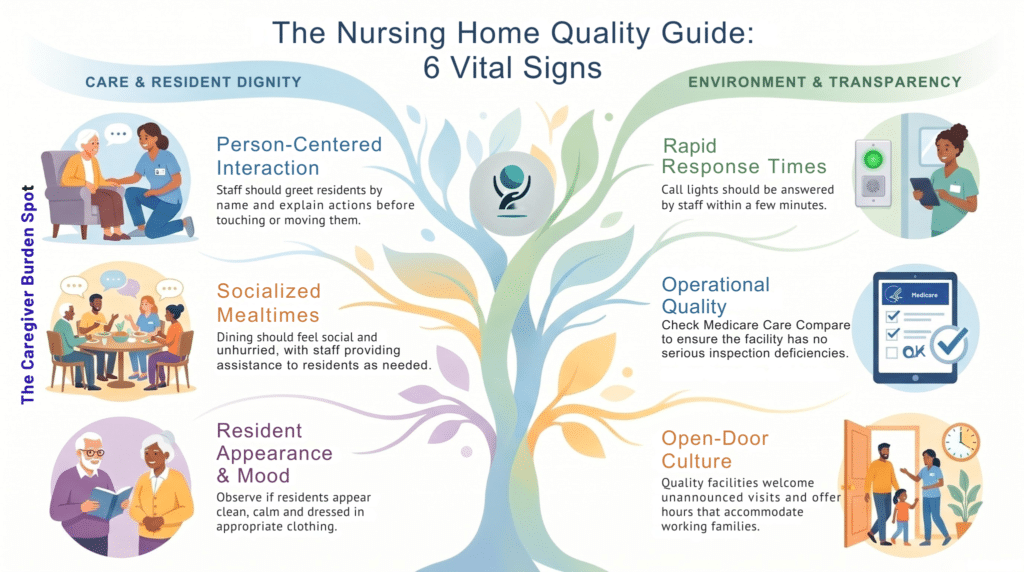
What makes a good nursing home?
Before you ever set foot inside a facility, it helps to know what makes a good nursing home in the first place. The answer is not a fancy lobby or the newest equipment. Quality comes down to five core factors:
- Adequate, well-trained staffing
- A clean, safe and respectful environment
- Transparent communication with families
- Strong inspection and compliance history
- A culture of dignity and compassion
These factors don’t always show up in online ratings alone. You need to observe them in person, ask pointed questions and trust what you see — not just what a brochure says. The sections below walk you through each of these areas step by step.
Start with staffing and daily care.

Staffing is the single clearest predictor of care quality. A beautiful building doesn’t mean if there aren’t enough trained people to provide consistent, attentive care.
When you tour a facility, pay close attention to how staff members interact with the residents. Do they make eye contact? Do they speak calmly and with patience? Do residents look clean, engaged and at ease? Call lights that go unanswered for long periods are a serious warning sign.
As of this writing, the Centers for Medicare & Medicaid Services, or CMS, finalized a minimum staffing standard of 3.48 total nursing staff hours per resident per day. That includes 0.55 hours of registered nurse care and 2.45 hours of nurse aide care. Unfortunately, many facilities still fall short of this standard.
Questions you should ask:
- How many nurses and aides cover each shift?
- What’s the staff turnover rate?
- Is a registered nurse on-site overnight?
- How quickly do staff respond to call lights?
- What’s the facility’s approach to staff training and retention?
One practical tip: Try to visit during a mealtime. Mealtimes reveal a great deal. Watch whether staff assist residents who need help eating, whether they seem rushed, and whether they interact warmly or just mechanically.
Know what to look for when touring a nursing home.

Knowing what to look for when touring a nursing home keeps you focused when emotions run high. Trust your senses. A facility does not need to look luxurious, but it should feel safe, clean and genuinely welcoming.
Watch for these warning signs:
- Strong or unpleasant odors that suggest poor hygiene
- Residents left unattended for extended periods
- Hallways cluttered with equipment or obstacles
- Call buttons or phones that ring without a response
- Staff members who appear visibly stressed, rushed or dismissive
Walk past the lobby. Many facilities invest heavily in an attractive entrance while resident rooms and common areas get far less attention. Ask to see a standard room, not a model one.
Visit more than once. An unannounced evening or weekend stop tells you far more about daily operations than a scheduled Tuesday morning tour. Ask yourself: Would I feel comfortable leaving my loved one here on a Sunday evening? Trust that answer.
Learn how to deal with nursing home problems.
Research ratings and inspection reports.

You have access to more information today than caregivers did even a decade ago. Use it. Before making any final decision, review ratings and inspection data from trusted sources:
- Medicare Care Compare rates facilities 1–5 stars based on inspections, staffing and care quality.
- U.S. News & World Report Best Nursing Homes can help you find highly rated short-term rehab and long-term care facilities.
- ProPublica Nursing Home Inspect offers detailed inspection reports, and eye-opening data about fines, and violations
Of course, online ratings only tell part of the story. If possible, speak privately with current residents or visiting family members. Ask whether staff respond quickly, whether communication feels honest, and whether the resident seems genuinely happy and safe. Personal conversations often surface details that no rating system captures.
Understand costs and insurance coverage.

Many families discover too late that Medicare doesn’t cover long-term nursing home care the way they expected. The Medicare benefit can last up to 100 days, with full coverage for the first 20 days and coinsurance for days 21–100. Long-term care costs fall to you.
Ask these financial questions early in your conversations with any facility:
- What services does the monthly fee include?
- What happens if private funds run out — does the facility accept Medicaid?
- Are there additional charges for therapy, transportation or medications?
- What does the admissions contract say about “responsible party” clauses?
Be cautious about admissions contracts. Some facilities use language that implies family members take on personal financial responsibility for payment. Never sign anything under pressure and review contracts carefully. Consult an elder law attorney if possible.
Consider how to choose a nursing home from a legal perspective.
Look for communication, compassion and family support.
A good nursing home treats family caregivers as partners in care, not as visitors. You should feel informed, respected and genuinely welcomed every time you walk through the door.
Look for these communication signals:
- Staff explain care plans in plain language.
- Phone calls and emails receive prompt replies.
- Care conferences and family meetings happen regularly.
- Visiting hours accommodate working family members.
- Staff know residents by name — and know their preferences and histories.

One resource many families overlook is their state’s Long-Term Care Ombudsman Program. Ombudsmen work independently to protect resident rights, investigate complaints and help families navigate disputes over transfers, discharges or care concerns. You can contact your state’s ombudsman before or after placement — at no cost.
Learn how to work with a long-term care ombudsman.
Compassion shows up in small moments: a caregiver kneeling beside a resident to make eye contact, a nurse pausing to remember a favorite song, a staff member who knows which resident hates lima beans. These moments aren’t accidental. They reflect the culture of the facility. Pay attention to them.
Finding the right nursing home is a process.
Knowing what to look for in a nursing home doesn’t make this decision easy. It makes it possible. You cannot eliminate grief or uncertainty from this process, but you can replace guesswork with information.
Take your time when you can. Visit facilities more than once. Ask every question on your list. Trust both the data and your instincts. And know that choosing a facility where your loved one receives professional, compassionate care is one of the most loving acts a caregiver can make.
Choosing the Right Nursing Home FAQ
What makes a good nursing home?
A good nursing home combines strong staffing ratios, consistent cleanliness, respectful caregivers, clear family communication and a clean inspection record. Culture matters as much as compliance. Look for a place where staff clearly enjoy their work and know residents as individuals.
What to look for in a nursing home visit?
Focus on staff interactions, cleanliness, response times, mealtime support and how residents appear both physically and emotionally. Visit at different times of day, including evenings and weekends. Ask to speak privately with a resident’s family member if possible.
What to look for when touring a nursing home?
Walk past the lobby and ask to see a standard resident room. Check for odors, clutter and how long call lights go unanswered. Watch staff behavior when they do not know anyone is observing them. Trust your instincts alongside the checklist.
Does Medicare pay for long-term nursing home care?
Generally, no. Medicare covers short-term skilled nursing care after a qualifying hospital stay, typically up to 100 days with increasing out-of-pocket costs after day 20. Long-term custodial care requires private funds, long-term care insurance or Medicaid once assets are spent down.
How often should I visit after placement?
Visit as often as possible, especially in the first few weeks. Frequent visits improve care quality, help your loved one adjust emotionally and allow you to catch problems early. Vary your visit times so you see the facility under different conditions.
Disclaimer: This article is for information and education only. It is not a substitute for advice from a doctor, therapist, financial advisor, or lawyer. Every caregiving situation is different. Always talk to a qualified healthcare provider, mental health professional, financial advisor, or elder law attorney before making decisions about a loved one's care, health, or finances.
Read our full disclaimer for more information. If you or someone you are caring for is experiencing a medical or mental health emergency, contact 911 or your local emergency services. In the U.S., the 988 Suicide & Crisis Lifeline (call or text 988) is available 24/7.